
For years, SEO success came down to two things: the right keywords and enough backlinks. In 2026, that formula isn’t enough anymore. The businesses winning in search — both traditional and AI-powered — are the ones that can prove they’re trustworthy, not just optimized. That’s where E-E-A-T comes in
What Is E-E-A-T?
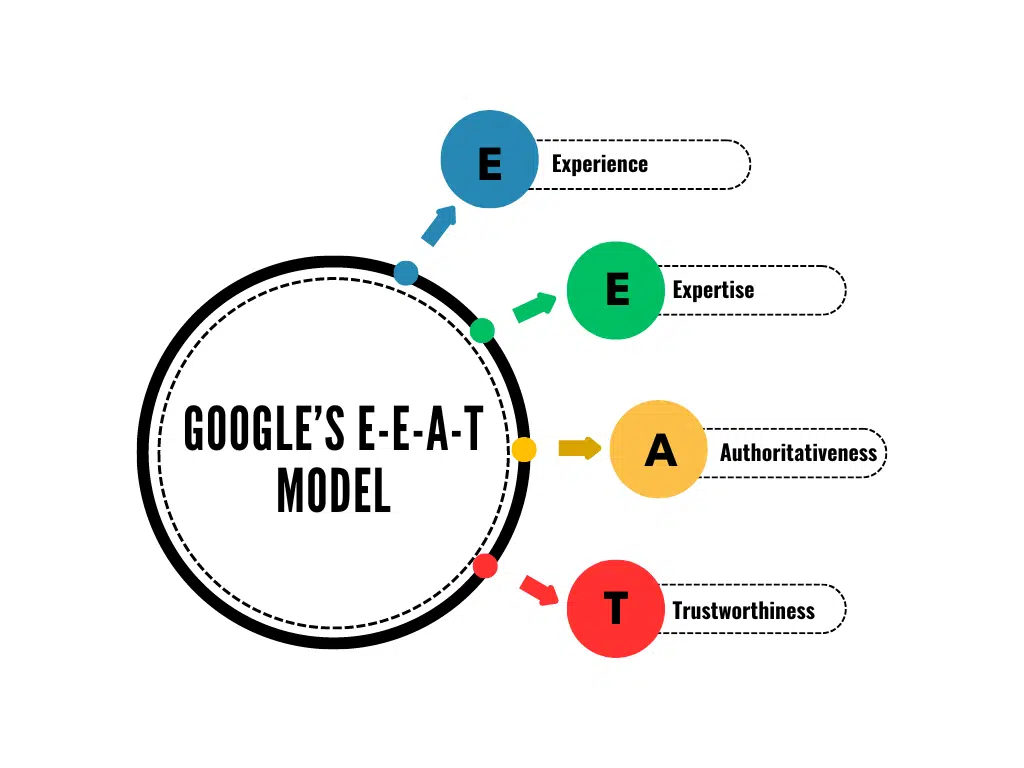
E-E-A-T stands for Experience, Expertise, Authoritativeness, and Trust. It’s the framework search engines — and increasingly, AI models — use to judge whether content and the business behind it deserve to be shown to real people.
<cite index=”21-1″>E-E-A-T signals — Experience, Expertise, Authoritativeness, and Trust — are the primary factors AI uses to filter which sources are credible enough to reference.</cite> And <cite index=”19-1″>the importance of E-E-A-T is expected to increase further in 2026,</cite> as search engines put more weight on who’s behind the content, not just what the content says.
Why This Shift Happened
Search engines got a lot better at spotting content that was written purely to rank — thin, keyword-stuffed, or AI-generated without any real substance behind it. At the same time, AI tools like ChatGPT need to know which sources are actually reliable before referencing them in an answer.
The result: both Google and AI search engines now reward businesses that can demonstrate real, first-hand experience and credibility — and quietly push down content that can’t.
<cite index=”20-1″>Brand building has become more important than ever, since websites with strong brand signals and a genuine presence across multiple platforms are more resistant to search engine updates</cite> that might otherwise hurt sites relying purely on keyword tricks.
What Each Part of E-E-A-T Actually Means for Your Business
Experience — Have you (or your business) actually done the thing you’re writing about? First-hand experience, case studies, and specific details are hard to fake and easy for search engines to recognize as authentic.
Expertise — Do you have real knowledge in your field? This doesn’t mean formal credentials are mandatory, but it does mean your content should reflect genuine understanding, not surface-level summaries.
Authoritativeness — Are other credible sources, customers, or platforms referencing your business? This is built over time through mentions, reviews, backlinks, and consistent visibility.
Trust — Is your website secure, transparent, and accurate? Trust is also shaped by how honestly you present your business — accurate claims, clear contact information, and real reviews all play a role.
How to Strengthen E-E-A-T for Your Business
1. Write from real experience, not just research. Share specific examples, case studies, or lessons from your own work. Generic advice is easy to find anywhere — your actual experience isn’t.
2. Let real customers speak for you. <cite index=”19-1″>Collecting authentic customer reviews helps both AI tools and search engines understand and trust your business,</cite> and displaying those reviews on your website reinforces that trust for visitors too.
3. Be visible where honest conversations happen. <cite index=”20-1″>Platforms like Reddit and Quora are seeing explosive growth in organic search traffic, as search engines increasingly reward real, user-generated experiences over polished marketing content.</cite> Genuine participation in these spaces — not just advertising — signals authenticity.
4. Keep your brand consistent everywhere. The same accurate information — business name, services, contact details — should appear consistently across your website, social profiles, and directory listings. Inconsistency quietly erodes trust signals over time.
5. Don’t chase every keyword — chase credibility. It’s tempting to write content purely because it might rank. Instead, focus on becoming a genuinely reliable source in your niche. Rankings that come from real authority tend to be far more stable than ones built on tricks.
The Bigger Picture
Keywords still matter they help search engines understand what your content is about. But in 2026, they’re no longer enough on their own. Search engines and AI tools alike are looking past the words on the page and asking a simpler question: can this business actually be trusted?
Businesses that answer “yes” through real experience, honest content, and genuine credibility — are the ones that’ll keep showing up, no matter how search continues to evolve.
If you’d like help auditing how trustworthy and credible your website currently looks to both search engines and AI tools, that’s exactly the kind of work I do at Digilodgy